
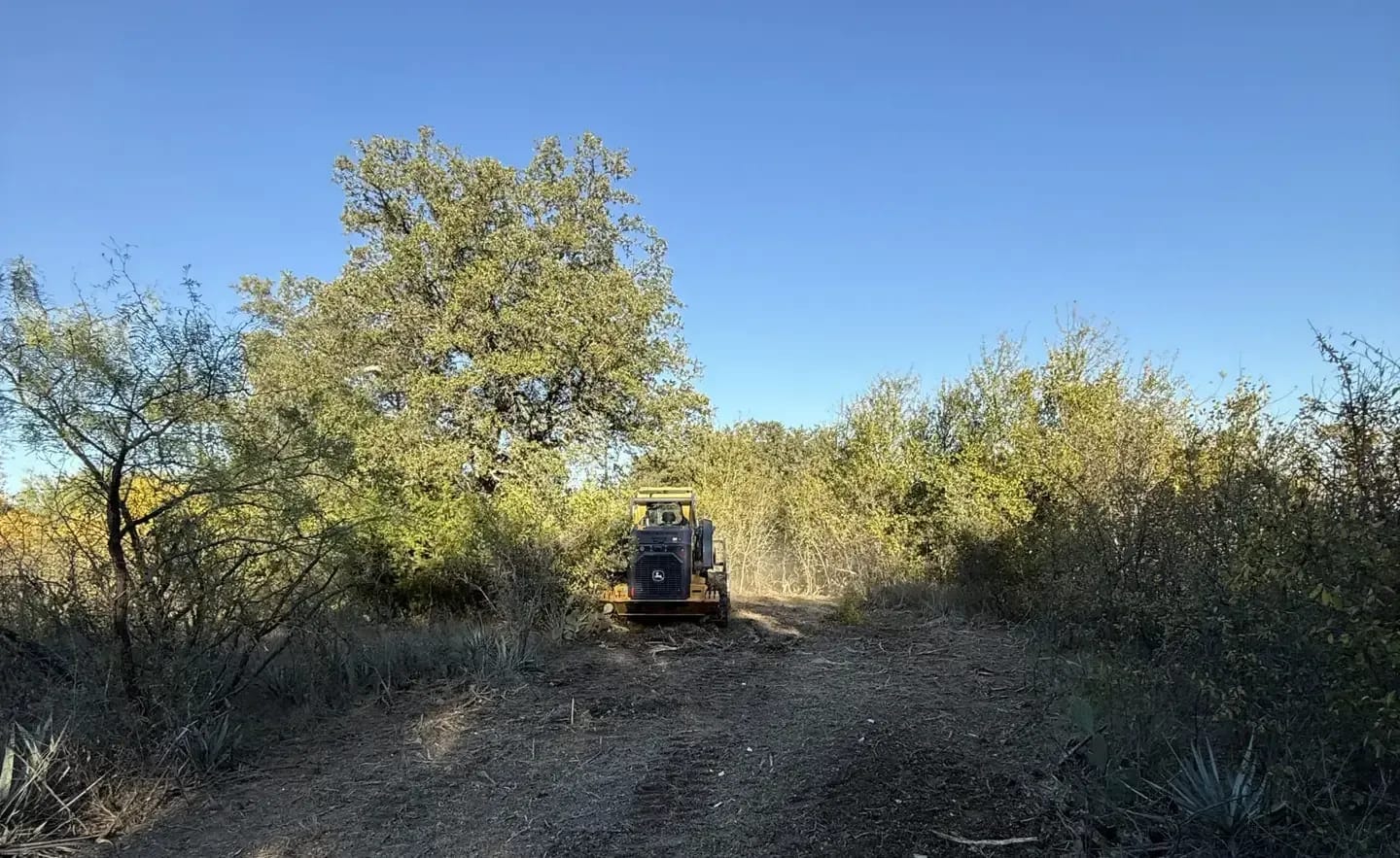
How long does land clearing take for a new home? A small, open work area may clear faster than a wooded site, but acreage alone cannot give you a reliable number of days. Access, tree size, roots, debris and wet ground all change the schedule. Get a site-based scope before you set a builder’s start date.
The bigger question is when the land will be ready for the next crew. Cutting brush is not the same as clearing a home footprint and removing roots. DropTine clears and grubs land in Central and West Texas; your builder handles grading. Plan the handoff, not just the machine time.
Why an acres-per-day answer can miss the real schedule
The finish line matters more than the acreage
Take two sites of the same size. One needs a path through light brush so a builder can see the ground. The other has cedar, old stumps and a tight gate where a future house will sit. The second job has more decisions and more work below the surface. Neither the lot size nor a satellite photo shows all of that.
Define the work area first: the house footprint, drive, access lane and any other areas your builder needs open. Mark trees that stay. Ask whether the estimate covers surface vegetation only, or also roots, piles and debris removal. The land clearing service explains the above-ground work; the written scope must say what the site will look like when it is done.
A minimum billed period is not a completion promise
DropTine has a two-day minimum for its jobs, even if a small area can be cleared faster. That is a billing minimum tied to moving and running heavy equipment, not a claim that every new-home lot takes exactly two days. Keep the quote, the planned working days and the date your builder can start as separate questions.
Did You Know? A clear-looking lot can still have stumps and roots where a foundation or drive is planned. Surface clearing and grubbing are separate parts of site work; ask which is included before you set a handoff date.
What happens before the clearing crew starts?
Walk the site with the end use in mind
Start with the builder’s rough layout, not a guess at how many acres to clear. Point out the proposed house site, driveway, septic area, gates and the trees you want to keep. If you do not have a final layout yet, say so. A contractor can discuss a preliminary scope, but a moving footprint may change the work later.
Look at the way in as well as the area to clear. A narrow gate, weak culvert, soft road or low branches may keep a truck and machine from reaching the work. If the crew has to open access first, that belongs in the schedule. Our construction-site preparation walkthrough covers the clearing, grubbing and builder-grading sequence in more detail.
Check digging and site rules before making a date
If the work will disturb the ground, deal with utility locations early. Texas811 says excavators must contact 811 at least two business days before digging, excluding weekends and holidays. That wait is separate from machine time. Private lines, such as irrigation or a line to a shed, may need their own check; tell the crew what you know is buried.
A home project may also have rules for soil disturbance. TCEQ’s construction stormwater guidance covers construction activity that disturbs one acre or more, including land in a larger common plan. That is not a blanket permit rule for every clearing job. Check the actual project with your builder and the right local office before work starts.
Pro Tip: Ask your builder which parts of the lot must be ready before grading, foundation work or utility installation. Put that answer on the clearing plan before comparing start dates. A crew cannot price or schedule a finish it has not been shown.
What makes the on-site work faster or slower?
Brush, trees and roots call for different work
Light brush can be handled differently from mature trees or dense cedar. Forestry mulching processes suitable vegetation on site; larger material or a construction footprint may call for mechanical clearing. If the builder needs stumps and roots out of the ground, grubbing adds another step. None of these methods has a single honest days-per-acre rate for every Texas property.
Decide what happens to the material as well. Mulch left in place, logs stacked on the lot and debris hauled away are different finishes. If a pile must leave before the builder can move in, the haul-off is part of the handoff schedule, even after the brush is cut. Note the place for a pile and whether trucks can reach it.
Ground and access can stop a good plan
Rock can slow root removal. Soft soil after rain can make equipment access unsafe or damage the ground you meant to protect. A steep patch, buried junk or an unmarked fence can also change the day’s work. A site walk helps a contractor plan for those limits; it cannot remove weather risk.
Leave room between clearing and the next crew for a finish walk, agreed cleanup and weather delays. Decide who will tell the builder if the date changes.
Did You Know? The time to cut vegetation is not always the time to hand over a build site. Roots, remaining debris and the builder’s own grading work can sit between those two dates. Name the handoff condition in writing.
How to get a useful clearing schedule for your build
Ask for two dates and one clear scope
The first date is when the crew expects to start. The second is when the agreed clearing and grubbing should be ready for review. Between them, the estimate should say which parts of the property are included, what happens to stumps and debris, how access will work, and what could change the timeline. A range with stated limits is more useful than a day count copied from another lot.
Share the builder’s handoff needs and say if your build date is tentative. For more on site conditions and methods, see the Texas land clearing guide.
Check the site before the builder takes over
At the finish walk, compare the ground with the agreed scope. Can the next crew reach the house area? Are the marked trees still protected? Are stumps, root balls and piles handled as promised? Record any open item before calling the site ready. The builder still needs to decide how to grade and prepare the final building surface.
Pro Tip: Put the handoff walk on the calendar when you book the work. It is easier to resolve a missed stump or blocked access route while the clearing crew and the scope are both fresh.
Frequently asked questions
How long does it take to clear one acre for a new home?
There is no dependable one-acre time for every home site. Brush density, trees, rock, access, roots and the required finish all matter. A site walk lets the contractor give you a schedule for your actual footprint instead of an online average.
Does a two-day minimum mean my clearing will take two days?
No. DropTine’s two-day minimum is a billing rule, not a guaranteed completion time. A site may need less machine time or more work, so ask for the expected schedule and the scope separately.
Is a lot ready to build as soon as the brush is cut?
Not always. Stumps, roots and agreed debris work may remain after surface clearing. Your builder also handles grading, so confirm what the clearing crew will hand over and what the builder needs before setting a start date.
Should I book the builder before the clearing estimate?
Talk to your builder early about the proposed footprint and access, but do not treat a clearing finish date as firm before the site walk. Share the builder’s needs with the clearing contractor, then leave room for utility checks, weather and the handoff walk.
Plan the handoff, not just the machine days
A realistic land-clearing schedule starts with the home footprint and ends with a site the next crew can use. The acreage matters, but the roots, access, debris plan and builder handoff decide what the work really includes. Keep those pieces in the same conversation before you choose a start date.
If you are planning a new home in DropTine’s Central or West Texas service area, request a free on-site estimate. Bring your proposed layout and builder’s timing. DropTine can walk the property, define its clearing and grubbing scope, and discuss a schedule based on the ground in front of you.